
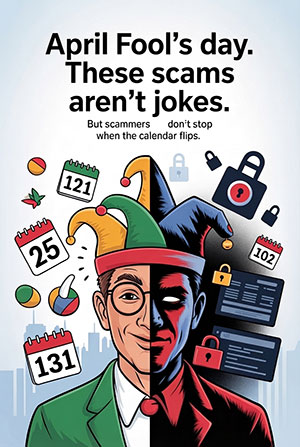
 April 1 comes and goes.
The fake announcements. The pranks. The “wait… is this real?” moments.
But scammers don’t stop when the calendar flips.
In fact, spring is one of the busiest seasons for cyberattacks — especially for healthcare practices, financial firms, and law offices across Carmel and the Greater Indianapolis area.
Not because teams are careless.
Because everyone is busy, moving quickly, and trying to keep up.
That’s when the most dangerous scams slip through — the ones that look normal enough to trust.
Here are three we’re seeing right now — and why even smart, well-meaning teams fall for them.
As you read, ask yourself one question:
Would everyone on your team pause long enough to catch these?
Scam #1: The “Unpaid Toll” Text
An employee gets a quick message:
“You have an unpaid toll balance of $6.99. Pay within 12 hours to avoid late fees.”
It references a real system.
The amount is small.
The timing feels believable.
They click, pay, and move on.
Except the link wasn’t real.
The FBI has received tens of thousands of complaints about these messages, and the volume continues to rise. Thousands of fake domains now exist solely to impersonate toll systems.
Why it works:
- The dollar amount feels harmless
- Most people have driven or parked recently
- It fits into a busy day without raising suspicion
The guardrail:
Legitimate toll agencies don’t demand payment via text links.
For businesses, the rule is simple:
➡️ No payments happen through text messages
➡️ Employees go directly to official websites or apps
➡️ Never reply — even “STOP” confirms the number is active
Convenience is the bait.
Process is the defense.
Scam #2: “Your File Is Ready”
This one blends seamlessly into everyday work.
An employee receives a file-sharing notification:
- DocuSign
- Microsoft OneDrive
- Google Drive
It looks completely legitimate.
They click.
They log in.
They move on.
Except now, someone else has their credentials.
And if it’s a work account, the attacker may now have access to your systems.
These attacks have surged because they use trusted platforms your team already relies on. In many cases, the email itself is technically legitimate — sent through real systems using compromised accounts.
That means:
- Spam filters don’t catch it
- The formatting looks perfect
- The sender appears trustworthy
The guardrail:
If a file wasn’t expected:
➡️ Don’t click the link in the email
➡️ Log into the platform directly (Microsoft 365, Google Drive, etc.)
➡️ Check if the file actually exists
Businesses can also reduce risk by:
- Limiting external file sharing
- Enabling alerts for unusual login activity
Simple habits. Big impact.
Scam #3: The Email That’s Written Too Well
Phishing emails used to be obvious.
Bad grammar. Strange formatting. Easy to spot.
That’s no longer the case.
Today’s attacks are:
- Clean
- Professional
- Context-aware
They reference real company names, real roles, and real workflows — often pulled from LinkedIn or your website.
And they’re targeted.
- HR teams get employee verification requests
- Finance teams get vendor payment changes
- Leadership gets urgent, realistic requests
Nothing looks out of place.
That’s the problem.
The guardrail:
Any request involving:
- Credentials
- Financial changes
- Sensitive data
…should always be verified through a second channel.
➡️ Call the person
➡️ Send a separate message
➡️ Walk down the hall
And before clicking anything:
➡️ Check the sender’s actual email domain
➡️ Treat urgency itself as a warning sign
Real security doesn’t rush.
What This Means for Your Business
These scams don’t rely on carelessness.
They rely on:
- Familiarity
- Timing
- Authority
- Speed
And the assumption that “this will only take a second.”
That’s why the real risk isn’t your people.
It’s relying on people to catch everything perfectly, every time, under pressure.
For professional practices in Carmel and Indianapolis, that risk can turn into:
- HIPAA violations
- Financial data exposure
- Confidential client information leaks
- Compliance issues
- Reputational damage
If one rushed click can create a serious problem, that’s not a people issue.
That’s a process issue.
And process issues are fixable.
A Practical Next Step
Most business owners don’t want to turn this into another project.
They don’t want to become cybersecurity trainers.
They just want to know their business isn’t quietly exposed.
If you’re not sure how your team would handle these situations — or where risk might already exist — it’s worth a quick conversation.
👉 Schedule a free 15-minute discovery call to review:
- Where scams are most likely to reach your team
- How your current systems handle these threats
- Simple ways to reduce exposure without slowing people down
No scare tactics.
No pressure.
Just clarity.
Because the goal isn’t to eliminate every risk.
It’s to make sure one small mistake doesn turn into a big problem.