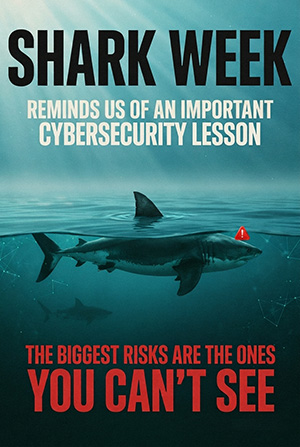
 Every summer, millions of people tune in to Shark Week.
Part of what makes it so compelling is that the danger is rarely visible. The water looks calm. Everything appears perfectly normal. Yet beneath the surface, there's activity you can't see.
Cybersecurity works much the same way.
The biggest threats facing businesses today rarely announce themselves. They don't begin with flashing warning lights or dramatic system failures. Instead, they blend into everyday business operations until someone clicks the wrong link, a fraudulent payment is approved, or sensitive information falls into the wrong hands.
For healthcare practices, law firms, and financial firms throughout Carmel and the Greater Indianapolis area, summer can create additional opportunities for cybercriminals. Employees are on vacation, schedules are less predictable, and normal approval processes are often interrupted. Attackers understand this—and they plan accordingly.
Here are three of the biggest cybersecurity risks businesses should be paying attention to this summer.
Business Email Compromise Is Still One of the Biggest Threats
Not every cyberattack begins with sophisticated hacking.
Many start with a simple email.
Business Email Compromise (BEC) attacks are designed to impersonate someone your employees already trust. It may look like an email from a vendor requesting updated payment information, a supplier asking for an invoice to be paid, or even a message that appears to come from an executive asking someone to process a wire transfer quickly.
Everything about the email looks legitimate.
The names are familiar. The language sounds professional. The request seems routine.
Unfortunately, that's exactly why these attacks are so successful.
Summer often increases the risk because key decision-makers are out of the office. Payment approvals may be delegated to someone unfamiliar with normal procedures, making unusual requests less likely to raise questions.
One of the simplest ways to reduce this risk is by establishing a verification process for financial requests. Before changing payment information or sending funds, employees should verify the request using a trusted phone number or another independent communication method.
That small pause can prevent a very expensive mistake.
Busy Employees Make Attractive Targets
Cybercriminals don't just target technology.
They target human behavior.
Most phishing emails are carefully timed to catch employees when they're distracted, rushing between meetings, or trying to clear an overflowing inbox before heading out on vacation.
The message may ask someone to reset a password, review a shared document, or approve an urgent request. Nothing about it appears particularly alarming.
That's the point.
Attackers know people are more likely to act quickly when they're busy.
That's why one of the most effective cybersecurity tools isn't software at all.
It's creating a culture where employees feel comfortable slowing down.
When something unexpected arrives—whether it's a login request, a payment instruction, or an unfamiliar link—employees should know it's perfectly acceptable to pause, verify, and ask questions.
In cybersecurity, urgency is often the first warning sign.
Your Vendors Can Become Your Vulnerability
Most businesses rely on third-party vendors every day.
Cloud software providers. Payroll companies. IT vendors. Accounting platforms. Document management systems.
These partnerships make businesses more efficient, but they also expand the number of pathways into your organization.
If a vendor experiences a security incident, attackers may attempt to leverage that relationship to gain access to your business.
That's why vendor risk management has become an increasingly important part of cybersecurity planning.
Ask yourself a few simple questions.
Which vendors currently have access to your systems or sensitive data?
Do former vendors or contractors still have active accounts?
Who inside your organization is responsible for reviewing and managing those relationships?
Many businesses discover they can't answer those questions as easily as they expected.
That's a sign it's time for a review.
Most Cybersecurity Risks Aren't Obvious
One of the biggest misconceptions about cybersecurity is that major threats are easy to spot.
In reality, they're often hidden beneath the surface.
Excessive user permissions. Outdated vendor accounts. Employees who unknowingly reuse passwords. Weak approval processes. Backup systems that haven't been tested recently.
None of these issues create immediate disruptions.
They quietly accumulate over time until the right circumstances expose them.
That's why proactive cybersecurity is so important.
The businesses that avoid major incidents aren't necessarily the ones spending the most money on technology.
They're the ones regularly reviewing their systems, questioning assumptions, and addressing small issues before they become larger problems.
A Mid-Summer Cybersecurity Check Is Time Well Spent
Summer is an excellent time to step back and evaluate your technology environment before business ramps up again in the fall.
For healthcare practices, financial firms, and law offices throughout Carmel and the Indianapolis area, a simple review of user access, vendor relationships, cybersecurity protections, and approval processes can uncover risks that might otherwise remain hidden.
The goal isn't to create fear.
It's to create confidence.
A Practical Next Step
If it's been a while since you've taken a comprehensive look at your cybersecurity posture, now is a great time to do it.
Schedule a free 15-minute discovery call, and we'll discuss your current technology environment, identify potential areas of risk, and talk through practical ways to strengthen your cybersecurity without disrupting your business.
No pressure.
No scare tactics.
Just a straightforward conversation about helping you stay productive, protected, and prepared.
Because the most dangerous cybersecurity risks usually aren't the ones making headlines.
They're the ones quietly waiting beneath the surface.