
Imagine you're on a commercial flight when unexpected turbulence hits.
You wouldn't want to hear the pilot say, "I've never dealt with this before."
The reason flying is one of the safest forms of travel isn't because emergencies never happen. It's because pilots spend countless hours training for situations they hope they'll never encounter. When something unexpected occurs, they aren't inventing a response--they're following a well-practiced plan.
The same philosophy applies in medicine, emergency services, manufacturing, and countless other professions where preparation matters.
Business technology should be no different.
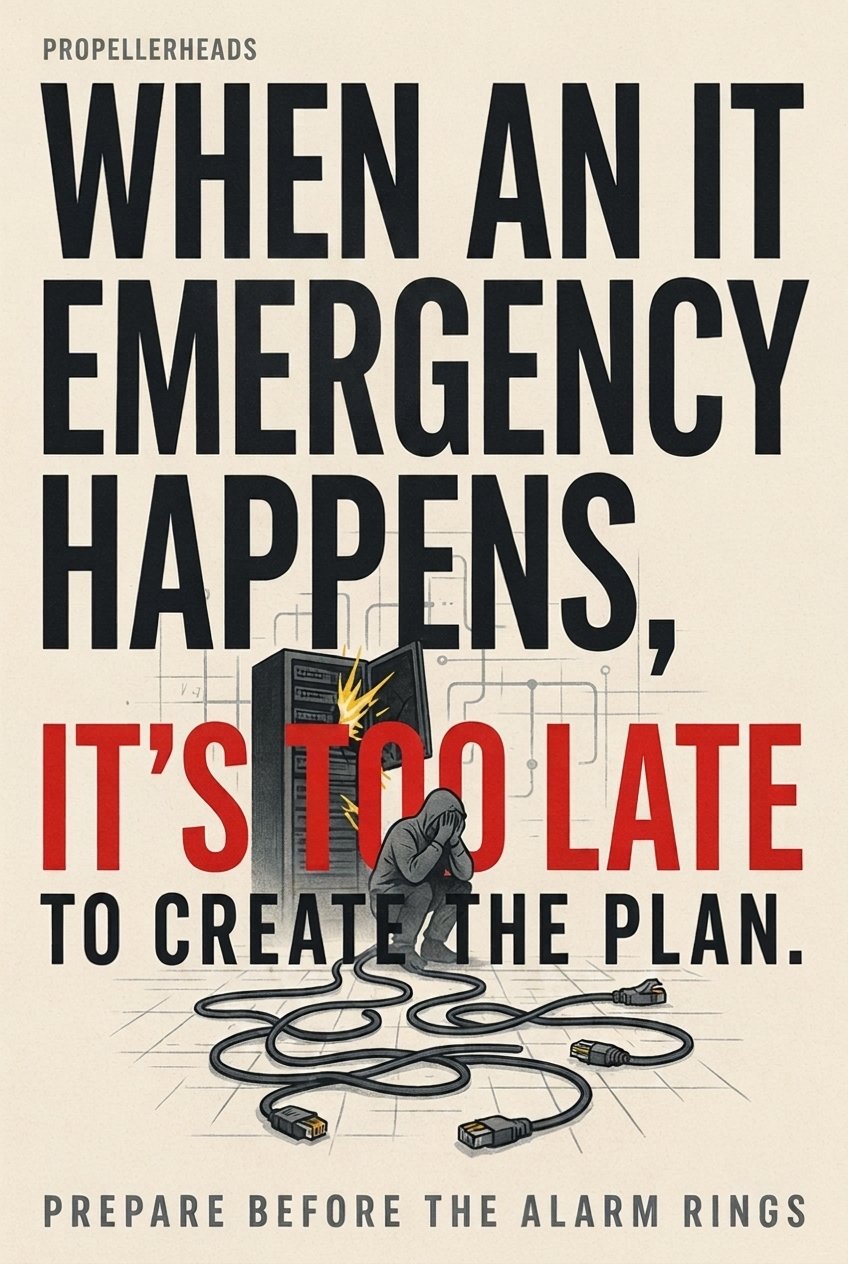
When systems fail, the time to create a recovery plan has already passed.
Technology Emergencies Rarely Happen at Convenient Times
Most business interruptions don't arrive with advance warning.
A server stops responding.
A ransomware attack locks users out of critical systems.
An internet outage disrupts communications.
Someone accidentally deletes important files.
A cloud application becomes unavailable.
Whatever the cause, the result is the same: your team needs answers immediately.
Most organizations have invested in cybersecurity tools, backups, and modern technology to reduce these risks. Those investments are important, but technology alone doesn't determine how quickly your business recovers.
Preparation does.
Every Minute Spent Deciding Is a Minute Lost
When there's no documented recovery plan, even small disruptions become more difficult than they need to be.
Questions that should already have answers suddenly become urgent.
Who is responsible for coordinating the response?
Which systems should be restored first?
How will employees continue working?
Who communicates with customers and vendors?
How long should everyone expect recovery to take?
While leadership works through those decisions, employees wait.
Customers wait.
Projects stall.
The technology problem quickly becomes a business problem.
Preparation Creates Confidence
Imagine two businesses experiencing the exact same outage.
Both lose access to critical systems at the same time.
The first business has tested its recovery procedures, assigned responsibilities, and documented how it will respond. Team members know their roles, communication begins immediately, and recovery follows a clear process.
The second business is trying to answer those questions for the first time while the outage is already affecting employees and customers.
The technology failure may be identical.
The business impact is not.
Preparation doesn't always prevent disruptions.
It dramatically reduces the confusion, delays, and financial impact that often follow them.
Recovery Is About More Than Technology
Business continuity isn't simply restoring servers or recovering files.
It's keeping your business operating.
That means understanding which systems are most critical, establishing communication procedures, defining responsibilities, and ensuring your team knows what happens next.
Recovery planning should answer questions long before an emergency ever occurs.
Can employees continue working if a key system becomes unavailable?
How quickly do critical applications need to be restored?
What are your customers likely to experience?
Who makes decisions during an outage?
The more clearly these questions are answered ahead of time, the more smoothly your business can respond when something unexpected happens.
Planning Is an Ongoing Process
Businesses evolve constantly.
New employees join the team. Software changes. Workflows improve. Cloud services are added. Customer expectations shift.
Your recovery plan should evolve right alongside them.
A plan that worked three years ago may no longer reflect how your business operates today.
That's why reviewing and testing your recovery strategy shouldn't be a one-time exercise. It should become part of your overall business planning.
Regular reviews help ensure your technology, your people, and your processes remain aligned.
The Best Time to Prepare Is Before You Need To
No pilot hopes to use emergency procedures.
No surgeon expects complications.
No business owner wants to experience a major technology disruption.
Preparation isn't about expecting the worst.
It's about making sure your business can continue serving customers when the unexpected happens.
The organizations that recover most effectively aren't necessarily the ones with the newest technology.
They're the ones that have invested the time to prepare.
Let's Talk About Your Recovery Strategy
If your business experienced a significant technology disruption tomorrow, would your team know exactly what to do?
If you're not completely sure, now is the right time to find out.
Schedule a free 15-minute discovery call, and we'll review your current backup, disaster recovery, and business continuity strategy. Together, we'll identify what's working well, where improvements can be made, and how to better prepare your business for whatever comes next.
No pressure.
No technical jargon.
Just a practical conversation about helping your business stay resilient, productive, and prepared.