
There's something impressive about the way families prepare for back-to-school season.
Backpacks get packed. Supplies get purchased. Bedtimes move back to something resembling normal. Calendars get organized, transportation gets figured out, and somehow everyone is ready when the first day arrives.
It's a useful reminder for business owners.
A little preparation at the right time can make the months ahead run much more smoothly.
September provides businesses with a similar opportunity. Summer is ending, Q4 is approaching, and there's still time to address priorities before year-end projects, budgets, holidays, and deadlines start competing for everyone's attention.
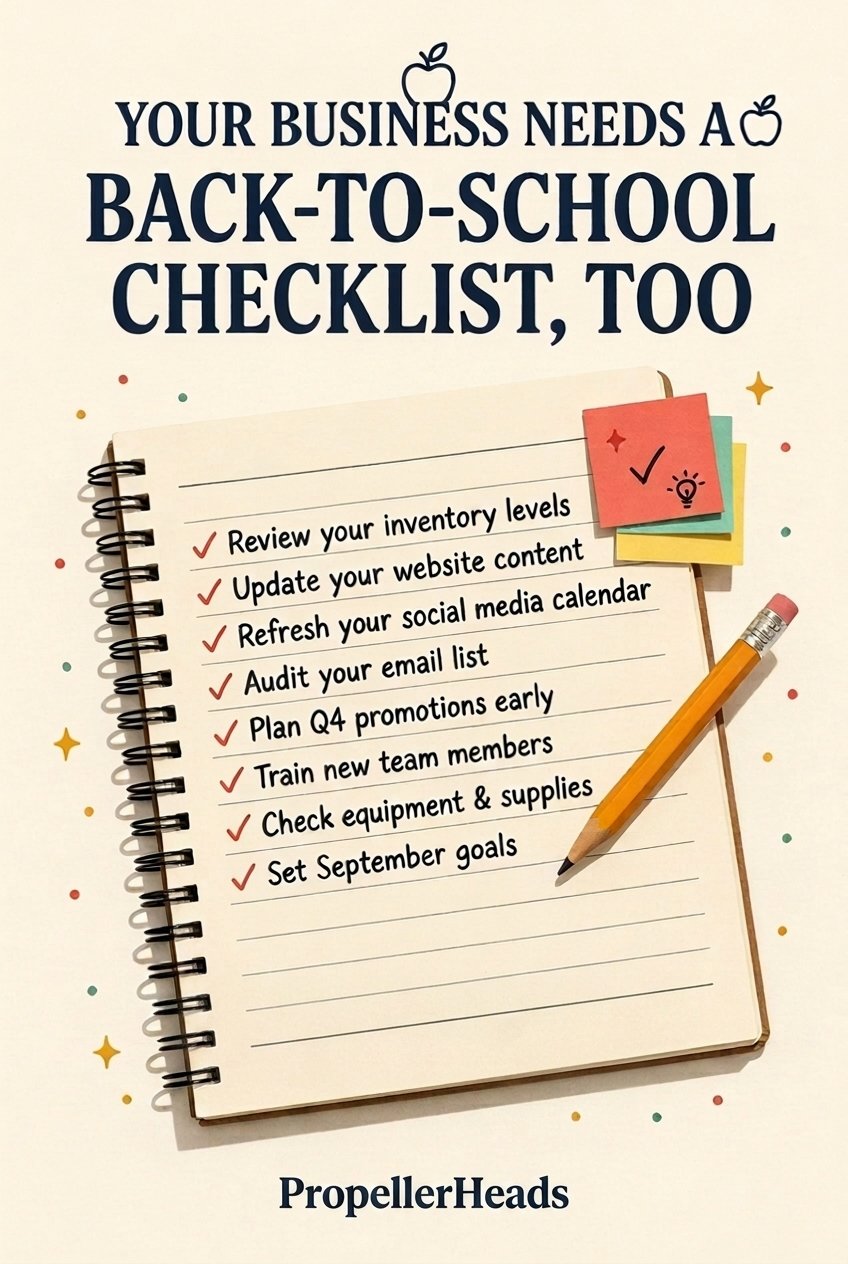
Consider this your business's back-to-school checklist.
Get Clear About What Has to Happen Before Year-End
Start with the big picture.
If you asked three members of your leadership team to name the company's most important priorities between now and December 31, would you hear the same answers?
It's easy to assume everyone is aligned when nobody has actually stopped to verify it.
What revenue goals need to be reached?
Which client or patient commitments can't slip?
What projects absolutely need to be completed?
Are there major hiring, operational, or technology decisions that need to happen before January?
September is a good time to get those priorities out of people's heads and into a shared plan.
When October and November get busy, your team shouldn't still be deciding what's important.
They should already know.
Take Another Look at Your Technology Budget
Technology expenses have an unfortunate habit of becoming noticeable when they're urgent.
A computer fails.
A warranty expires.
A software renewal arrives.
A server reaches the end of its useful life.
A cybersecurity or compliance requirement suddenly needs attention.
Instead of letting those expenses surprise you late in the year, use September to look ahead.
Review upcoming software and licensing renewals. Identify aging hardware that may need replacement. Talk about cybersecurity, backup, compliance, or infrastructure projects that have been postponed.
This is also a good time to begin thinking about next year's technology budget.
Technology decisions are much easier to make when they're planned business investments rather than emergency purchases.
Make Sure Your Team Still Matches Your Plan
Your business may look different today than it did at the beginning of summer.
Employees have taken vacations. New people may have joined the organization. Responsibilities may have shifted. Someone may be doing a job that used to belong to someone else simply because that's what worked at the time.
Those changes aren't necessarily problems.
But they deserve a review.
Does everyone understand their current responsibilities?
Do new employees have access to everything they need--and only what they need?
Have former employees' accounts and permissions been removed?
Are important processes dependent on one person who happens to know how everything works?
For healthcare practices, law firms, financial firms, and other professional organizations, these questions can have implications for productivity, cybersecurity, compliance, and client service.
The goal isn't to create more bureaucracy.
It's to make sure the way your business operates in practice still matches the way leadership thinks it operates.
Deal With the Little Things Everyone Has Learned to Ignore
Every business has a technology version of the junk drawer.
Old user accounts.
Outdated documentation.
Software nobody uses anymore.
Computers everyone complains about.
Processes that require six steps when they should require two.
A Wi-Fi problem employees have simply learned to work around.
Individually, these issues may not seem important enough to demand immediate attention.
Collectively, they create friction.
They can also create unnecessary expenses, security gaps, and productivity problems.
September is a good time to pull that list back out and decide what should be fixed, replaced, documented, or eliminated before the end-of-year rush begins.
Not every problem needs a major project.
Sometimes removing a handful of small frustrations can make a noticeable difference in how efficiently your team works.
Ask One Important Preparedness Question
September is also National Preparedness Month, which makes it a natural time to think about business continuity.
You don't need to start with a 50-page disaster recovery plan.
Start with one question:
**If our business experienced an unexpected disruption tomorrow, would everyone know what to do?**
Imagine employees couldn't access a critical application.
Or your internet connection went down.
Or a power outage affected the office.
Or a cybersecurity incident temporarily interrupted normal operations.
Who would make decisions?
How would employees communicate?
What systems would need to be restored first?
How would you continue serving clients or patients?
If your leadership team can answer those questions confidently, that's encouraging.
If the conversation produces a lot of "I think..." and "probably..." responses, you've identified something worth addressing before you actually need the answers.
Schedule a Q4 Strategy Conversation With Your IT Provider
Your IT provider should know more about your business than what's currently sitting in the support queue.
September is an excellent time to have a broader conversation.
Talk about where the organization is headed during Q4. Discuss upcoming projects and technology investments. Review aging equipment and software renewals. Look at cybersecurity, backup, compliance, and business continuity priorities.
And don't stop at what's broken today.
Ask what's likely to need attention six or twelve months from now.
A good managed IT provider should help connect those technology decisions to your larger business objectives.
That's particularly important for organizations throughout Carmel and the Greater Indianapolis Area where technology is central to serving patients, protecting confidential client information, meeting professional obligations, and keeping employees productive.
Your IT relationship should help you plan--not simply react.
Get Ready Before the Bell Rings
The families that have the smoothest start to the school year aren't necessarily the ones with fewer things to manage.
They're usually the ones who prepared before the first morning arrived.
Businesses have the same opportunity right now.
September gives you a window to clarify priorities, review your budget, clean up lingering issues, check your preparedness, and make sure your technology strategy supports where you're headed next.
The goal isn't to have everything perfect before Q4.
It's to enter the final months of the year knowing what matters and what needs attention.
Start With a 15-Minute Conversation
If this checklist uncovered a few things your business has been meaning to address, let's talk about them.
Schedule a free 15-minute discovery call, and we'll discuss where your technology stands today, what may need attention before year-end, and where better planning could improve security, productivity, and reliability.
No pressure. No technical jargon.
Just a practical conversation about getting your business and technology ready for the months ahead.
Call us at **317-219-0408** or visit https://www.mypropellerheads.com/discoverycall/ to schedule your discovery call.