
It’s 4:17 on a Friday afternoon.
An employee receives an email that appears to be from the owner. The request is simple: “Can you send me the updated banking information before you leave?”
The name is right. The message sounds familiar. The request seems reasonable. And with everyone trying to finish the week and head home, the easiest thing to do is respond.
There’s only one problem.
The owner never sent it.
Your IT team can put strong cybersecurity protections in place, but technology can’t make every decision for your employees. At some point, protecting the business comes down to whether someone recognizes that something doesn’t feel right—and knows what to do next.
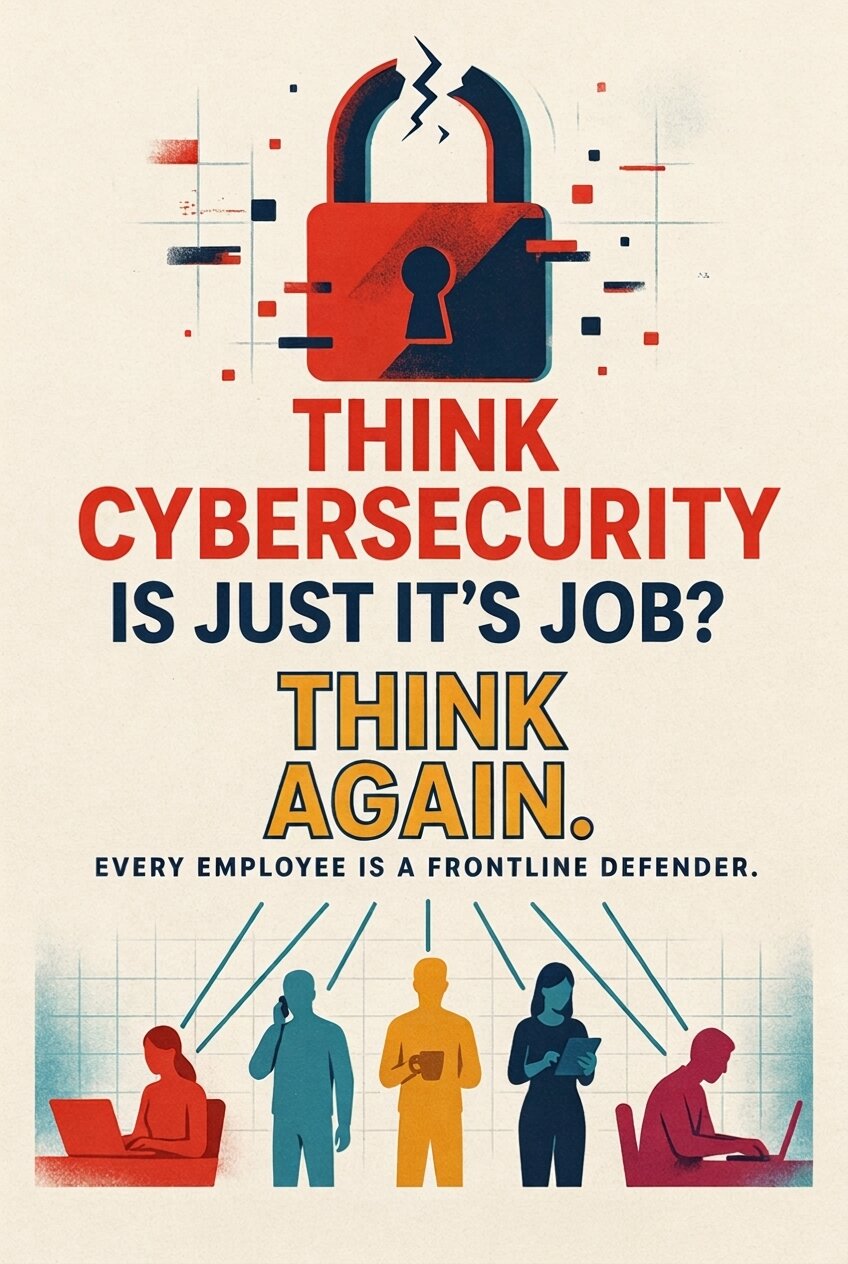
That’s why cybersecurity isn’t simply an IT responsibility. It’s a business responsibility.
Cybersecurity Doesn't Live Only in the IT Department
Many business owners understandably think about cybersecurity as something happening behind the scenes.
The computers have security software. Someone manages the firewall. Updates get installed. Backups are running. Multi-factor authentication is enabled. The IT provider is monitoring things.
So cybersecurity feels handled.
Those safeguards matter, but they're only part of the picture.
Your cybersecurity strategy is also being tested every time an employee decides whether to trust an email, open an attachment, approve a login, share information, change payment details, or grant someone access to a system.
Those decisions don't happen inside the IT department.
They happen in accounting, administration, human resources, operations, and leadership. They happen at the front desk of a healthcare practice, inside a law firm, and among employees handling sensitive financial information.
That means your people aren't outside your cybersecurity strategy.
They're part of it.
Technology Can't Make Every Decision
Good cybersecurity tools can stop a tremendous amount of suspicious activity before employees ever see it.
But no security system can eliminate every questionable request.
That's especially important because suspicious messages don't always look suspicious anymore.
An email can be professionally written. It can reference a real vendor. It can appear to come from an executive or coworker. It can fit naturally into an existing business process.
And sometimes the situation itself isn't unusual.
Vendors really do change banking information. Executives really do make urgent requests. Employees really do need access to documents they've never opened before.
That's what makes these situations difficult.
The employee at the keyboard has to decide whether what they're seeing makes sense.
Technology can provide layers of protection around that employee. Your business processes need to help with what happens next.
"Be Careful" Isn't a Cybersecurity Strategy
Most employees have heard some version of the same advice:
Be careful with email.
Don't click suspicious links.
Watch out for phishing.
That's good advice, but it leaves an important question unanswered.
What should an employee actually do when something doesn't look right?
They should know how to verify an unusual request without relying on the suspicious message itself. They should know who to contact internally or at the company's IT provider. They should understand how to report a questionable email. And if they've already clicked something, entered a password, opened an attachment, or approved a request, they should know what to do immediately afterward.
That last part is particularly important.
You don't want an employee spending 30 minutes wondering whether something is serious enough to report.
You also don't want someone staying quiet because they're embarrassed about clicking the wrong link or worried they'll get in trouble.
When employees have clear instructions, the decision becomes easier.
Instead of asking themselves, “Am I overreacting?” they can simply follow the process.
That's a much better position for everyone.
Leadership Determines Whether Employees Speak Up
A healthy cybersecurity culture starts with leadership.
Employees pay attention to what leaders actually do, not simply what the policy says.
If an owner regularly asks employees to bypass normal verification procedures because they're in a hurry, the team learns that speed is more important than process.
If managers treat security questions as interruptions, employees may hesitate to ask them.
And if someone makes an honest mistake and gets publicly embarrassed for reporting it, other employees learn a dangerous lesson: keep quiet.
Fortunately, leadership can send the opposite message just as easily.
When leaders follow the same verification procedures they expect employees to follow, those procedures become part of the culture.
When someone questions an unusual request and leadership supports that decision—even when the request turns out to be legitimate—employees learn that speaking up is encouraged.
And when an employee makes a mistake but reports it immediately, the response should reinforce the importance of fast communication.
The objective isn't to create a workplace where employees are afraid to make a mistake.
It's to create one where they're comfortable raising their hand when something doesn't look right.
Good Cybersecurity Habits Should Fit the Way Your Business Works
Security procedures also need to be practical.
If verifying a payment request requires six phone calls, three approvals, and finding someone who's rarely available, employees will eventually look for shortcuts.
Good cybersecurity processes should protect the business without unnecessarily getting in the way of doing business.
For example, your accounting team might have a simple procedure requiring payment changes to be verified through a previously established contact method rather than through the email requesting the change.
Employees might have a clearly defined way to report suspicious messages.
Your team might know exactly who to contact if someone accidentally enters credentials into a questionable website.
Those aren't complicated cybersecurity concepts.
They're business habits.
And the easier those habits are to understand and follow, the more likely employees are to use them when it matters.
Training Should Prepare Employees for Real Decisions
Cybersecurity awareness training is important, but the goal shouldn't simply be checking a box once a year.
Training should help employees recognize the situations they're actually likely to encounter.
What does an unusual payment request look like?
How should someone respond to an unexpected multi-factor authentication notification?
What should an employee do if a vendor suddenly asks for sensitive information?
How can someone verify an executive's urgent request without creating unnecessary delays?
For healthcare practices, law firms, financial firms, and other professional organizations, those conversations should also reflect the kinds of sensitive information employees handle every day.
The goal isn't to make everyone a cybersecurity expert.
It's to give employees enough knowledge and confidence to recognize when they should stop, verify, and ask for help.
Everyone Has a Role, but No One Should Have to Guess
Now go back to that employee at 4:17 on Friday afternoon.
The goal isn't for that person to become suspicious of every email from the owner.
It's for the employee to recognize when a request falls outside the normal process and know exactly what happens next.
Maybe that means calling the owner using a known phone number.
Maybe it means contacting a manager.
Maybe it means forwarding the message to the IT provider for review.
Whatever the procedure is, the employee shouldn't have to invent it at 4:17 on Friday.
It should already be part of how the business operates.
That's what a strong cybersecurity culture looks like.
Technology provides protection. Processes provide consistency. Employees provide another layer of awareness. Leadership makes sure all three work together.
Your IT Partner Should Help Build the Entire System
A proactive IT partner shouldn't simply install cybersecurity tools and wait for something to happen.
They should help you look at the bigger picture.
Are the right technical safeguards in place? Do employees understand common risks? Are there clear procedures for reporting suspicious activity? Does leadership know what happens if an incident occurs? Are your protections evolving as your business and the threats around it change?
For businesses in Carmel and throughout the Greater Indianapolis Area, especially healthcare practices, law firms, and financial firms, cybersecurity needs to support the way the organization actually operates.
That requires more than software.
It takes the right combination of technology, people, processes, training, and ongoing guidance.
Cybersecurity Is Everyone's Responsibility—But You Don't Have to Manage It Alone
Your employees don't need to become cybersecurity professionals.
They need clear expectations, practical procedures, good habits, and the confidence to speak up when something doesn't feel right.
Your leadership team doesn't need to understand every technical detail, either.
But it does need to create an environment where cybersecurity is treated as part of running the business rather than something delegated entirely to IT.
If you're not sure whether your current approach has the right combination of technology, employee awareness, and practical processes, schedule a free 15-minute discovery call with our team.
We'll talk about how you're handling cybersecurity today, where there may be gaps, and what practical steps could strengthen your approach.
No pressure. No scare tactics. No technical jargon.
Just a practical conversation about building a business where everyone understands the role they play in keeping it secure.
Call us at 317-219-0408 or visit https://www.mypropellerheads.com/discoverycall/ to schedule your discovery call.